

Moving to a new neighborhood sounds exciting right up until the boxes are unpacked and real life settles in. That’s usually when it hits. You don’t just miss your old friends. You miss your people.
Motherhood was never designed to happen in isolation, yet relocating can quietly strip away the support system you depended on without even realizing how much you needed it. That’s why these friendship apps matter more than people think. They’re not about collecting random online acquaintances. They’re about rebuilding your village—locally, practically, and without the awkwardness of trying to force friendships at preschool pickup.

We tested the biggest friend-finding apps with one simple question in mind: do they actually help moms meet other moms nearby in real life? User density mattered. Safety mattered. So did filters, ease of use, and whether the app felt alive or abandoned.
Here are the five apps that genuinely stand out.
What actually works?
Peanut gets called “Tinder for moms” all the time, mostly because of the swipe-to-match setup. Honestly, the swiping isn’t the best part. The real magic happens inside the Groups and Pods feature.
That’s where the app starts feeling less like a dating platform and more like an active neighborhood circle. You can jump into chats for local moms, working moms, breastfeeding support, toddler activities, or even hyper-specific groups like “Summer 2026 Babies.” Instead of awkward one-on-one introductions, conversations happen naturally. Someone asks about splash pads nearby. Another mom suggests coffee after nap time. Before long, people are planning stroller walks together.
That organic group dynamic works far better than cold messaging strangers.
Pricing
Peanut is free to use for matching, community groups, and posting. There’s also a Peanut Plus subscription and lifetime upgrade option that unlocks extra features and visibility, starting around $79.99.
Pros
Huge user base, especially in major U.S. suburbs and cities.
Strong verification system that keeps the platform focused on women and moms.
Group chats make it much easier to transition from online conversation to real-world meetups.
Cons
The swipe-based matching can feel draining after a while, and ghosting happens constantly.
Ads and premium upsells can become a little relentless over time.
What actually works?
BFF by Bumble surprised me the most.
Instead of endlessly messaging one person at a time, the app leans heavily into local events and group activities. That changes everything. You can find nearby gatherings or create your own within minutes—playground meetups, stroller walks, moms’ brunches, whatever fits your life.
And because it’s activity-focused, there’s less pressure. You’re not trying to “click” instantly through chat bubbles. You’re simply showing up alongside other women who also want connection.
For moms who just moved, that matters. A lot.
One standout feature is the ability to host events with RSVP limits, invitations, and scheduling tools built right into the app. It removes so much of the friction that normally keeps people from organizing something in real life.
Pricing
Unlike Bumble’s dating side, BFF is completely free. No subscriptions. No locked event features.
Pros
Entirely free ecosystem.
Fantastic local event tools that make in-person meetups easy to organize.
Less awkward than direct-message-heavy friendship apps.
Cons
It’s not specifically designed for moms, so you’ll need to filter profiles yourself.
The app collects a fairly broad amount of user data for advertising purposes.
What actually works?
Most people think of Nextdoor as the app where neighbors argue about fireworks and missing cats. Fair. But buried inside all that neighborhood chaos is one genuinely useful feature: hyper-local parenting groups.
Because users have to verify their address, the people you meet actually live nearby. Not “kind of nearby.” Like… around the corner nearby.
Search terms like “moms,” “playgroup,” or “parents,” and you’ll often uncover existing neighborhood circles that have already been meeting for years. That proximity becomes incredibly valuable when life with kids gets unpredictable. Need a last-minute playground meetup? Borrow a snow suit? Find a babysitter recommendation? This is where Nextdoor shines.
Pricing
Free to join and use. The platform makes money through local advertising and sponsored content.
Pros
Unmatched neighborhood accuracy.
Excellent for finding local parenting recommendations and community groups.
Useful for spontaneous real-life connections because everyone is physically close.
Cons
The general tone of the platform can get negative fast.
Parenting filters are minimal, so it’s harder to find moms with kids in the same age range.
What actually works?
MamaMeet feels like it was built by someone who actually understands how dramatically motherhood changes from one stage to the next.
The app’s best feature is its motherhood-stage filtering. Pregnancy, newborn life, toddler chaos, school-age parenting—they all come with completely different routines and emotional bandwidth. MamaMeet lets you narrow matches based on exactly where you are in that journey.
That sounds small until you realize how much easier friendships become when both moms operate on roughly the same schedule. A mom surviving 4 AM newborn feeds probably isn’t planning wine nights at 9 PM. A toddler mom may desperately want daytime park meetups.
The app gets that.
Pricing
Basic browsing and profile setup are free. Premium features, including enhanced messaging and image sharing, start around $4.99 per month.
Pros
Excellent stage-of-motherhood matching.
Clean, modern interface with solid safety tools.
More intentional and focused than broader friendship apps.
Cons
Currently limited to iOS users.
Smaller user base than Peanut, especially in newer or less populated areas.
What actually works?
Meetup is old-school internet community building—and honestly, that’s part of its charm.
Instead of swiping through profiles, you search for existing parent groups that already host regular events. In many cities, you’ll find long-running moms’ clubs, toddler playgroups, stroller fitness meetups, and parenting communities with active calendars.
This works especially well if you hate small talk online.
You don’t need to spend three days messaging someone before meeting. You just RSVP, show up at a park or café, and start talking to people face-to-face.
For introverted moms, that structure can feel much easier than trying to “network” socially through endless chat threads.
Pricing
Free for users joining groups. Some organizers charge small annual dues to help cover Meetup hosting costs.
Pros
Access to established local parenting communities.
Ideal for moms who prefer structured, recurring events.
Less pressure to maintain constant online conversations.
Cons
The app itself feels a bit dated.
Some suburban groups are inactive, so checking recent event activity is essential.
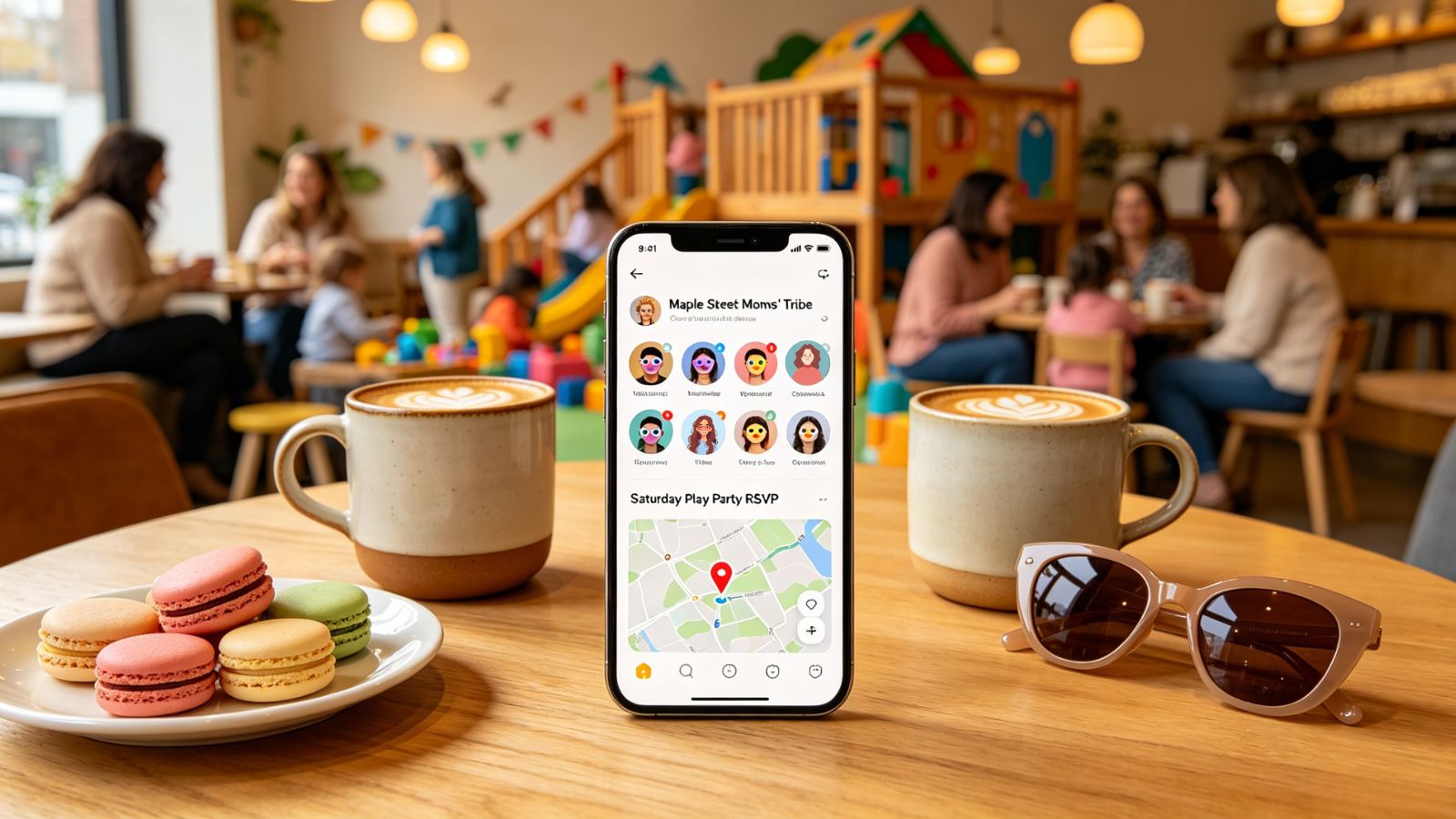
If you just moved and need to rebuild your social circle from scratch, BFF by Bumble is probably the strongest place to start.
Peanut has the largest mom-specific community, but the swipe-heavy setup can start feeling emotionally exhausting pretty quickly. Nextdoor is unmatched for hyper-local connections, though you’ll have to wade through neighborhood drama to find them.
BFF works because it gets people off their phones and into real life faster. The event tools remove the awkwardness. Instead of trying to manufacture instant friendship through messaging, you simply show up somewhere with other women who are also looking for connection.
And honestly? That’s usually how adult friendships happen anyway.
One playground meetup. One coffee run after preschool drop-off. One “Hey, are you free next Tuesday?” at a time.