

Most of us like to think we have a decent grasp of world geography… right up until someone asks us to point out Kyrgyzstan on a map.
Or name Australia’s capital.
Or explain why the flags of Luxembourg and the Netherlands aren’t actually the same.
That confidence can disappear fast.
And honestly, it’s not because people are bad at geography. It’s because most of us learned it the same way: staring at flat maps in textbooks, memorizing lists of capitals, and repeating facts long enough to survive a quiz. Then a week later? Gone.
Turns out geography doesn’t stick particularly well when it feels like data entry.
Real geographic knowledge works differently. Your brain wants interaction. It wants shapes, movement, patterns. It wants to see a border, tap a location, make a mistake, correct it, and repeat the process until a country stops feeling like random trivia and starts feeling familiar.
That’s where good geography apps separate themselves.
The best ones don’t just ask questions. They create a loop: see it, find it, forget it, recover it, repeat. Over time, scattered facts slowly turn into a mental map.
We looked at the strongest options through three lenses: map accuracy, flexibility, and whether the app actually helps information stay in your head after the novelty wears off.
Here are the standouts.
Pricing: Free basic version / One-time purchase (~$1.99–$3.99) unlocks full offline maps and removes ads
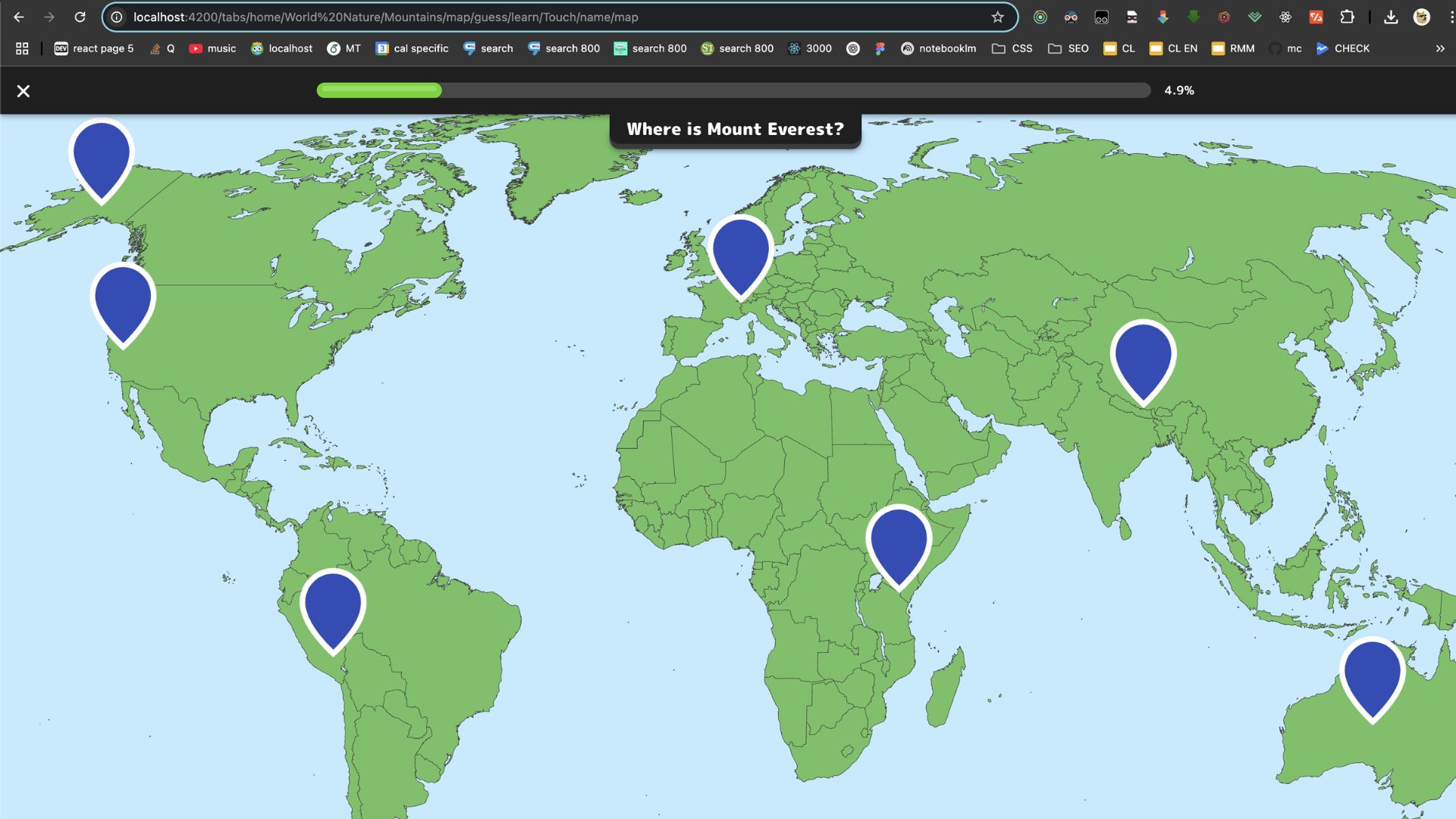
Seterra doesn’t waste much time trying to entertain you.
No spinning rewards. No animated fireworks. No endless game mechanics competing for your attention.
Instead, it focuses on one thing: repetition through interaction.
The app gives you a place—maybe a country, province, capital, or river—and asks you to physically find it on an unlabeled map. No multiple choice. No lucky guessing.
You either know where it is… or you don't.
And when you miss, Seterra immediately shows how far off you were before bringing the question back later.
Simple system.
Very effective.
Because there’s a big difference between recognizing a name and actually knowing where something sits in the world.
· Huge library with more than 300 map quizzes covering countries, flags, rivers, provinces, and much more.
· Voice support helps with pronunciation for less familiar regions and place names.
· The design leans heavily toward educational utility over visual excitement.
· Progress tracking exists, but long-term review scheduling feels limited.
· Not flashy.
· Just dependable.
Pricing: Free with ads / Premium available
If Seterra feels like a focused study session, StudyGe feels more like holding a tiny interactive globe in your hands.
And yes—it looks good.
Instead of relying entirely on flat maps, the app lets you spin and explore a fully interactive 3D globe. Tap a country and information appears instantly: capital city, population, language, currency, flag, land area.
Suddenly geography starts feeling less like memorization and more like exploration.
You stop asking, Where is this country?
You start asking, Wait... I didn’t know that.
That curiosity matters.
Because curiosity tends to remember things better than obligation.
· Beautiful interface with smooth globe interactions and strong dark mode support.
· Multiplayer modes add a fun competitive angle.
· Full-screen ads interrupt sessions often in the free version.
· Small countries and crowded regions can become frustrating tap targets.
· Tiny island nations suddenly become unexpectedly difficult.
Pricing: Free basic version / Additional content available via in-app purchases
Some geography apps ask you where France is.
This one asks where France is... and then asks about its GDP, mountains, religion, national symbols, historical currency, and a dozen other things before letting you breathe.
It’s a lot.
For some people, that's fantastic.
World Geography goes far beyond borders and capitals by connecting places with broader context. Geography becomes less about maps and more about understanding how countries fit into the world around them.
The result feels closer to a giant interactive encyclopedia than a simple quiz app.
· Enormous question database with thousands of challenges.
·Detailed performance tracking highlights weak spots country by country.
· Information overload can happen quickly.
· Interface design favors raw data over simplicity.
· If you love trivia rabbit holes, you’ll probably disappear into this app for hours.
· If you just want to learn where countries are? It may feel like overkill.
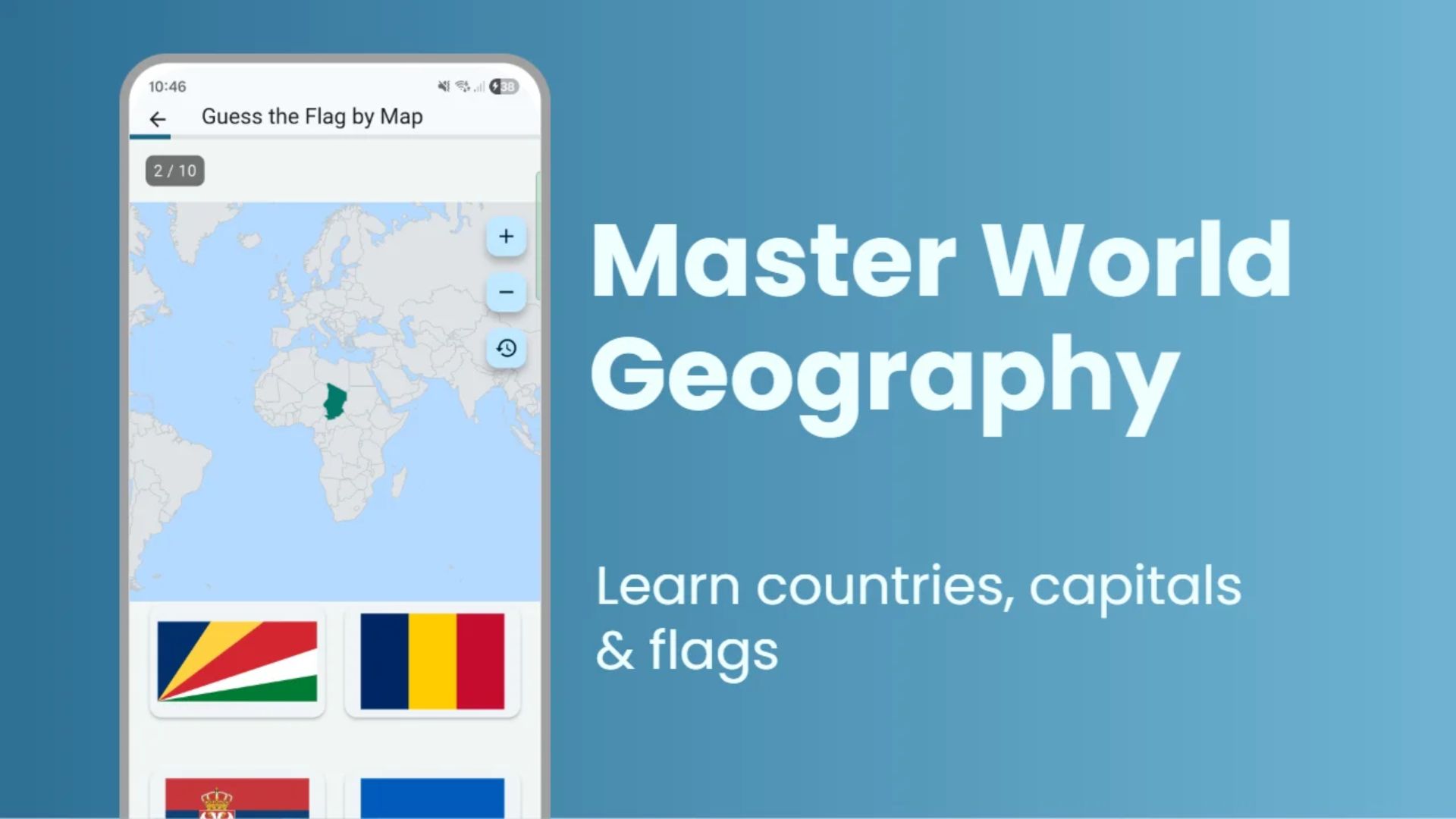
For most people trying to build a genuine mental picture of the world, Seterra Geography still feels like the strongest overall choice.
StudyGe offers a more visually impressive experience. World Geography goes deeper for people who love statistics and broader context. Both have their strengths.
But Seterra keeps winning for one simple reason:
It makes you find things.
Not recognize them.
Not guess them.
Find them.
That distinction matters more than it sounds. Seeing a country's name in a list and physically scanning a blank map for its location trigger two very different kinds of memory.
Do it enough times and something interesting starts happening.
The world stops looking like random shapes on a page.
It starts feeling familiar.