
Every vinyl collector knows the feeling. You’re halfway through a dusty crate in some tiny record shop when you spot it — an original-looking pressing with a clean sleeve, barely any ring wear, and a price tag that seems suspiciously reasonable. You buy it on instinct, feeling like you just pulled off a small heist… only to get home and realize you already own the exact same copy. Even worse, sometimes the record you passed on turns out to be the rare pressing worth real money. That’s the strange thing about vinyl collecting: it’s part music obsession, part detective work. Matrix numbers scratched into dead wax, subtle label variations, regional pressings that look identical unless you’ve spent years buried in collector forums arguing about them.
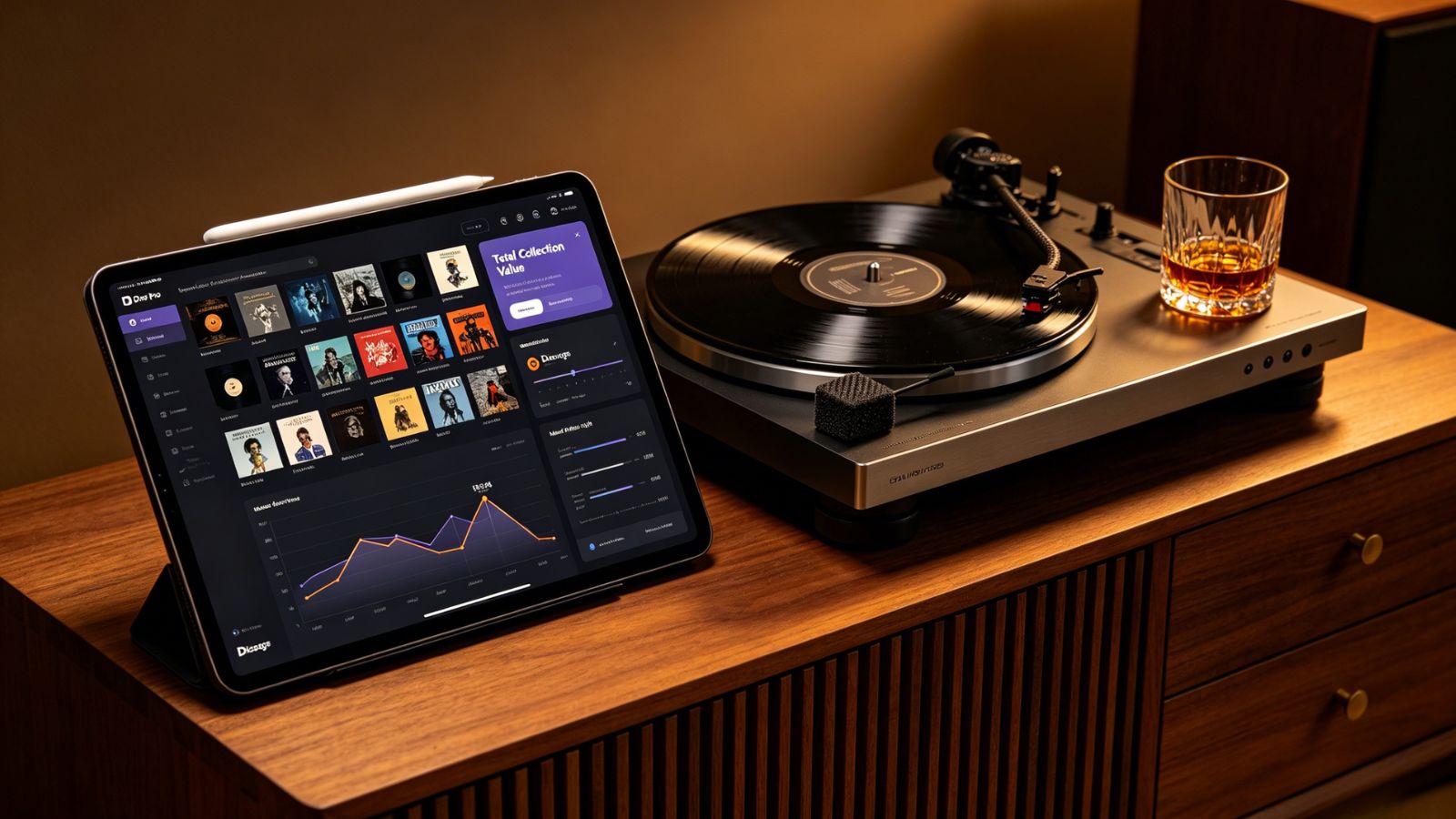
Once your collection grows beyond a few shelves, memory becomes useless fast. Spreadsheets help for a while, but eventually you need something built for the hobby itself — an app that can scan barcodes in a dimly lit shop, identify specific pressings, track market values, and stop you from accidentally buying your third copy of the same Fleetwood Mac reissue. After testing the biggest vinyl cataloging apps across iOS and Android, a few clearly stood above the rest. Some excel at pricing and collection valuation, others are built for obsessive archival detail, and a handful focus on making your collection visually clean and easy to browse. These are the apps that actually hold up once your hobby turns serious.
Discogs isn’t just a record app anymore. It’s basically the operating system of vinyl collecting.
The database is enormous. Almost absurdly so. Obscure Japanese pressings, unofficial bootlegs, tiny regional variants, first editions with microscopic label differences — if a physical release exists, there’s a decent chance someone has documented it on Discogs already.
And that depth matters.
A barcode scan usually pulls up the exact release within seconds. Older records without barcodes can still be identified through matrix numbers etched near the center of the vinyl. That’s often the only reliable way to distinguish a valuable original pressing from a common reissue worth five bucks.
Once records are added to your collection, Discogs automatically tracks market value using real sales history pulled directly from its marketplace. Low price. Median price. High-end sales. You get a surprisingly accurate snapshot of what your shelves are actually worth in the current market.
Which can be dangerous knowledge, honestly.
Some collectors discover they’re sitting on a small fortune. Others learn they accidentally spent $40 on a record worth $8. Both experiences build character.
Best part? The app is free.
Easily the largest vinyl database available
Excellent barcode and matrix-number identification
Real-world pricing data based on actual sales
Strong marketplace integration for buying and selling
Flexible collection organization tools
Barcode scanning can struggle in dark record stores
Crowd-sourced entries occasionally create duplicate or messy listings
This app takes a more practical, speed-focused approach.
Instead of obsessing over deep archival details, Vinyl Scanner is built for quick identification and rapid price checks. Snap a photo of an album cover and the app tries to match it against online databases to estimate current market value.
That sounds simple, but it’s surprisingly useful in the real world.
Flea markets. Garage sales. Estate sales. Places where you don’t necessarily have time to stand there typing catalog numbers into your phone while somebody else circles the crate waiting for you to move.
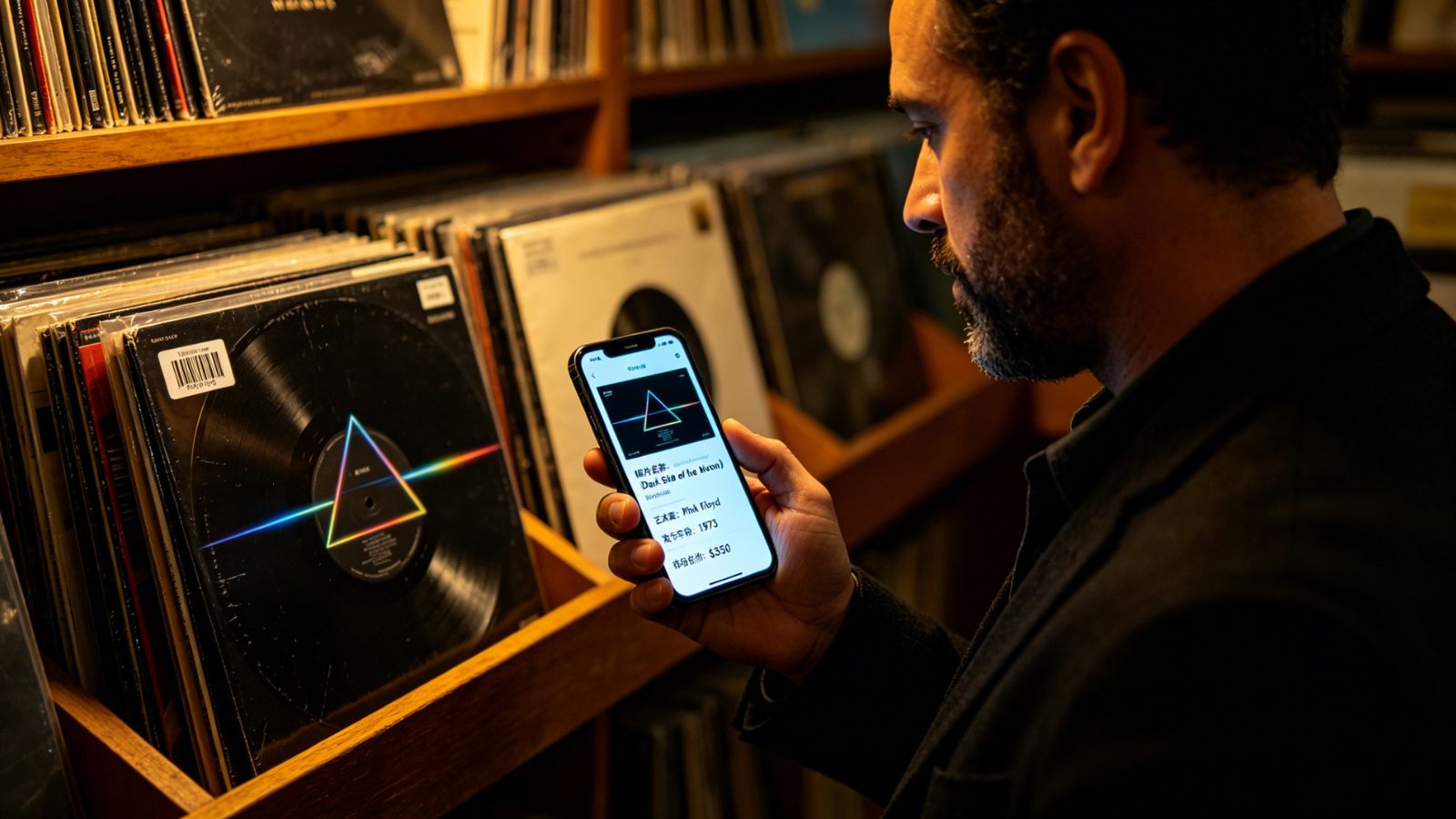
The image-recognition system works especially well for common releases and recognizable cover art. Pull out your phone, scan the sleeve, and within seconds you get a rough idea whether you’re holding something valuable or another dollar-bin copy of Rumours.
The app is free to start, though unlimited scans and detailed pricing tools require a subscription.
Fast cover-art recognition
Great for quick price checks while crate digging
Simple, uncluttered interface
Works well for casual collectors and resale hunting
Weak long-term cataloging features
Similar reissues can confuse the image scanner
iCollect Music feels less like a music app and more like a full inventory management system.
And for certain collectors, that’s exactly the appeal.
This is the app for people with shelves organized by genre, catalog number, condition grade, purchase location, and storage box label. The kind of collectors who know precisely where every record lives and probably own protective sleeves for their protective sleeves.
The customization here is impressive. Beyond basic album info, you can log purchase prices, condition notes, shelf locations, personal ratings, and almost any custom detail you care about. If your collection spans vinyl, CDs, cassettes, and DVDs, the app also handles those under the same ecosystem.
It’s less romantic than some of the prettier apps on this list, but extremely effective if organization matters more to you than aesthetics.
The app starts free with limitations, while full access requires either a subscription or lifetime upgrade.
Deep customization for serious collectors
Excellent cross-device syncing
Supports multiple physical media formats
Strong archival structure for large collections
Valuation data isn’t as precise as Discogs
Interface feels more functional than inspiring
Record Box understands that vinyl collecting is visual.
People don’t spend years hunting records just to stare at spreadsheets afterward. Album art is part of the experience. The shelves themselves become part of the room.
This app leans fully into that idea.
Instead of presenting your collection as a giant text list, Record Box displays everything in a beautiful grid of high-resolution cover art that feels surprisingly close to flipping through physical crates. Browsing your digital collection actually feels enjoyable instead of administrative.
It’s clearly designed with modern collectors and DJs in mind. Smooth animations, clean layouts, smart filtering — everything feels polished without becoming overdesigned.
There’s even a random album picker, which sounds gimmicky until you spend 20 minutes staring at your shelves unable to decide what to play.
The free version supports smaller collections, while the premium unlock is a low-cost one-time purchase.
Gorgeous visual presentation
Smooth, intuitive browsing experience
Great for cover-art-focused collectors
Affordable lifetime pricing
iOS only
Limited built-in marketplace functionality
CLZ Music takes the opposite approach from Discogs.
Where Discogs embraces community-driven chaos, CLZ focuses on clean, standardized organization. Every album entry feels carefully formatted and professionally maintained. Artist names, genres, tracklists, labels — everything looks tidy and consistent.
That sounds minor until your collection hits several thousand records.
At that scale, messy metadata becomes infuriating. CLZ avoids a lot of that frustration by relying on its own curated database rather than leaning entirely on user submissions.
The barcode scanner is also excellent. Fast, responsive, and surprisingly reliable even under bad lighting conditions.
What CLZ doesn’t prioritize quite as heavily is real-time market valuation. It’s built more for organization and archival management than active buying and selling. Serious value tracking usually works better when paired with outside databases.
The app runs on a subscription model after a short free trial.
Extremely clean and consistent data formatting
Fast barcode scanning
Reliable cloud backups
Excellent for massive collections
Live market valuation tools are limited
Subscription model won’t appeal to casual collectors
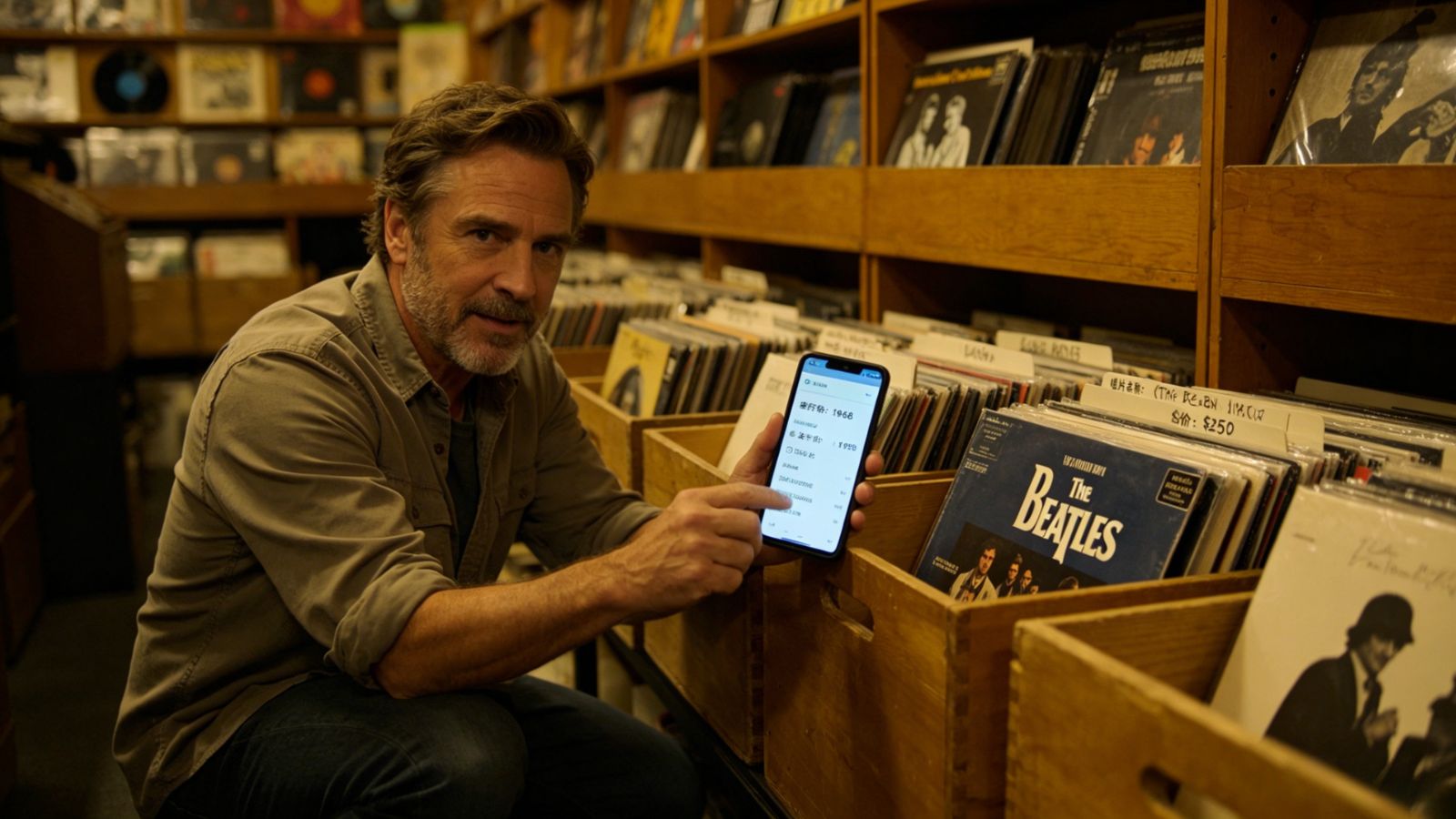
If you collect vinyl seriously — even casually serious — Discogs is still the app everything else gets compared against.
CLZ Music may offer cleaner organization. Record Box absolutely looks better. iCollect gives power users more customization. Vinyl Scanner is faster for quick pricing checks in the wild.
But Discogs does the one thing collectors care about most: it connects the physical object in your hand to its real history and market value almost instantly.
That’s hard to beat.
The database depth alone is staggering. One tiny matrix variation can completely change a record’s rarity, and Discogs remains one of the few platforms capable of tracking that level of detail at scale. Add in live marketplace pricing, collection valuation, wishlists, and mobile scanning tools, and it becomes less of an app and more of an essential companion for crate diggers.
Because once you’ve spent enough Saturdays flipping through dusty record bins, you realize something pretty quickly:
Half the fun is finding the record.
The other half is figuring out exactly which version you just found.