If you’ve ever woken up exhausted after what should’ve been a full night’s sleep—or had a partner complain that your snoring sounds like a chainsaw—you’ve probably wondered whether it’s “just snoring” or something more serious.
That’s exactly why sleep-monitoring apps have exploded in popularity over the last few years. While no phone app can officially diagnose obstructive sleep apnea (OSA), the best ones can absolutely help you spot warning signs: loud snoring patterns, breathing interruptions, restless sleep, oxygen irregularities, and recurring nighttime disturbances.
Over the past few weeks, we tested the most popular snore-tracking and sleep-monitoring apps on both iPhone and Google Play. We weren’t looking for gimmicky “sleep scores.” We focused on what actually mattered in real-world use:
• Accurate snore recording
• Clear overnight audio playback
• Sleep apnea risk indicators
• Long-term trend tracking
• Ease of use at 2 AM when you’re exhausted
• Honest value for the subscription price
Here are the five apps that genuinely stood out.
Availability: App Store and Google Play
Pricing: Free version available; Premium subscription and in-app purchases available.
Why It Stands Out
SnoreLab is still the gold standard for snoring analysis apps, and after testing it side-by-side against several competitors, it remains the most useful option for people specifically worried about sleep apnea warning signs.
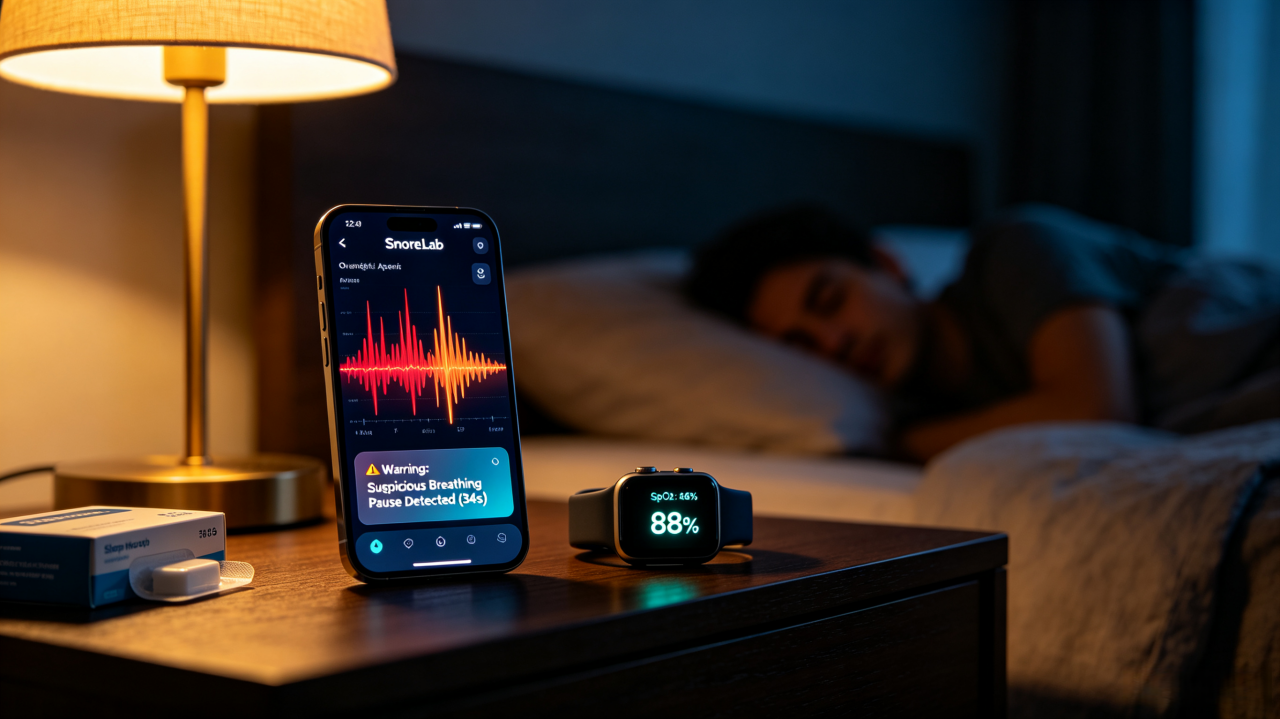
The app listens throughout the night using your phone’s microphone and generates a “Snore Score” based on intensity and duration. More importantly, it creates a detailed timeline showing exactly when snoring spikes happened and lets you replay the audio clips in the morning.
What impressed us most during testing was how easy it was to identify suspicious breathing patterns. On several recordings, we could clearly hear pauses followed by gasping or heavy recovery breaths—the kind of patterns doctors often ask about during sleep apnea screenings.
SnoreLab also does a great job with long-term trend tracking. If you experiment with side sleeping, weight loss, mouth tape, alcohol reduction, or CPAP therapy, the app makes changes obvious very quickly.
One important caveat: it is not a medical diagnostic tool. Even the developers and sleep experts are clear that apps like this can only flag possible warning signs—not confirm apnea itself.
Pros
• Best overall snoring analysis
• Excellent audio playback and overnight timelines
• Helpful long-term trend tracking
• Easy to export reports for doctors
• Available on both iPhone and Google Play
Cons
• Premium features are heavily pushed
• Can occasionally mistake background noise for snoring
• Not a replacement for a clinical sleep study
Availability: App Store and Google Play
Pricing: Free basic version; Premium subscription available.
Why It Stands Out
Sleep Cycle is technically a general sleep tracker first, but its snoring and respiratory monitoring tools have become surprisingly sophisticated.
Unlike SnoreLab, which focuses almost entirely on snoring, Sleep Cycle gives you a broader overview of your sleep quality. During testing, we found it especially useful for correlating snoring with poor sleep recovery, restless movement, and interrupted sleep cycles.
Its smart alarm remains one of the best features in the category. Waking up during lighter sleep genuinely made mornings feel less brutal compared to traditional alarms.
More recently, Sleep Cycle has expanded its respiratory tracking features through AI-powered sound analysis, including monitoring snoring and breathing disturbances.
What we liked most was that the app felt less clinical and more sustainable for long-term use. You can leave it running nightly without feeling like you’re conducting a medical experiment every evening.
Pros
• Excellent overall sleep tracking
• Smart alarm actually works well
• Good respiratory and snoring insights
• Clean, polished interface
• Easy for beginners to use
Cons
• Less detailed snore analysis than SnoreLab
• Best features require Premium
• Some sleep-stage estimates can feel inconsistent
Availability: App Store and Google Play
Pricing: Free trial available; subscription required for full access.
Why It Stands Out
ShutEye sits somewhere between a sleep tracker and a snore recorder, and it’s clearly designed for people who want more detailed overnight monitoring without diving into medical-grade equipment.
During testing, the standout feature was its event detection system. The app records snoring, sleep talking, coughing, movement, and sudden noises throughout the night. If you suspect your sleep is constantly interrupted, this can be surprisingly revealing.
Its interface is also far more modern and beginner-friendly than many competitors. The app presents nightly sleep reports in a way that feels understandable instead of overly technical.
That said, accuracy depends heavily on phone placement. If your phone isn’t close enough—or you roll away from it during the night—some events can get missed. Reddit users reported similar experiences during real-world use.
Pros
• Easy-to-understand sleep reports
• Tracks multiple nighttime disturbances
• Good for casual monitoring
• Modern, polished design
Cons
• Subscription gets expensive over time
• Accuracy depends heavily on phone placement
• Not ideal for serious apnea tracking
Availability: App Store and Google Play
Pricing: Free trial available; subscription plans offered.
Why It Stands Out
BetterSleep is best known for meditation and sleep sounds, but its sleep tracking features are much better than most people realize.
The app monitors sleep quality, movement, disturbances, and snoring using your phone’s sensors and microphone. It also integrates well with Apple Health and Apple Watch for users who want additional biometric data.
What stood out during testing was how approachable the app felt. BetterSleep doesn’t overwhelm you with clinical terminology or scary health warnings. Instead, it focuses on helping users improve sleep habits gradually.
For people who suspect mild snoring issues but aren’t ready to jump into hardcore sleep analytics, that softer approach can actually be a positive.
Pros
• Excellent user experience
• Strong relaxation and sleep-audio features
• Good integration with Apple Health
• Beginner-friendly sleep tracking
Cons
• Less specialized for snoring
• Subscription pricing adds up
• Serious apnea concerns may outgrow it quickly
Availability: App Store
Pricing: Free tier available; Premium subscription available.
Why It Stands Out
Snollo is one of the newer sleep apps we tested, but it impressed us with its privacy-first approach and surprisingly detailed overnight analysis.
Unlike some apps that process recordings on external servers, Snollo emphasizes on-device processing, meaning your overnight audio never leaves your phone.
The app also integrates with Apple Watch data to track sleep stages, heart rate variability, SpO2, and breathing-related patterns. When testing it with an Apple Watch, the additional biometric context made the sleep reports feel noticeably more useful than audio-only trackers.
This is probably the best option right now for privacy-conscious iPhone users who already live inside Apple’s ecosystem.
Pros
• Strong privacy protections
• Excellent Apple Watch integration
• Tracks more than just snoring
• Good free tier
Cons
• iPhone-only
• Smaller user base than major competitors
• Requires Apple Watch for best results
For most people trying to figure out whether their snoring could be linked to sleep apnea, SnoreLabis still the best overall app in 2026.
It strikes the right balance between simplicity and genuinely useful sleep data. The overnight recordings, snore timelines, and long-term trend tracking make it incredibly effective for spotting patterns that are worth discussing with a doctor.
That said, it’s important to keep expectations realistic. No smartphone app can officially diagnose sleep apnea. If you regularly experience loud snoring, choking or gasping during sleep, daytime exhaustion, or witnessed breathing pauses, you should still speak with a sleep specialist and consider a proper sleep study.